About All Tours Wildlife ToursHalf Day ToursAnd Yellowstone ToursFrom Jackson HoleSafari ToursPrivate ToursSelf-Guided Audio Tours Directions Hours & Fees
Find Tours 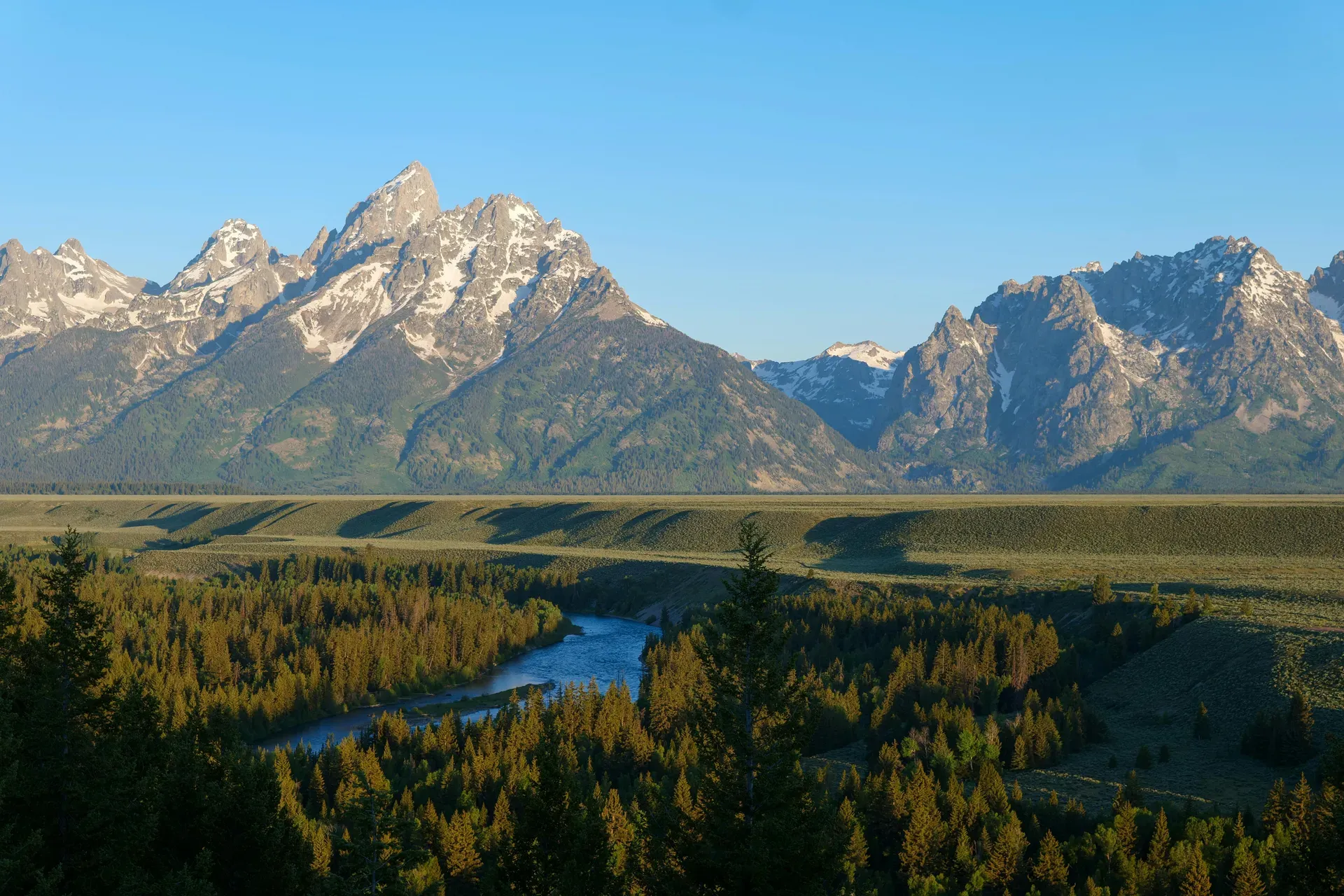
This 310,000-acre park in northwestern Wyoming centers on the Teton Range, a spectacularly rugged mountain chain rising 7,000 feet abruptly from the Jackson Hole valley. Visitors can hike the 7-mile trail around Jenny Lake, photograph historic 1890s Mormon homesteads, and drive the 42-mile scenic loop along the Snake River.
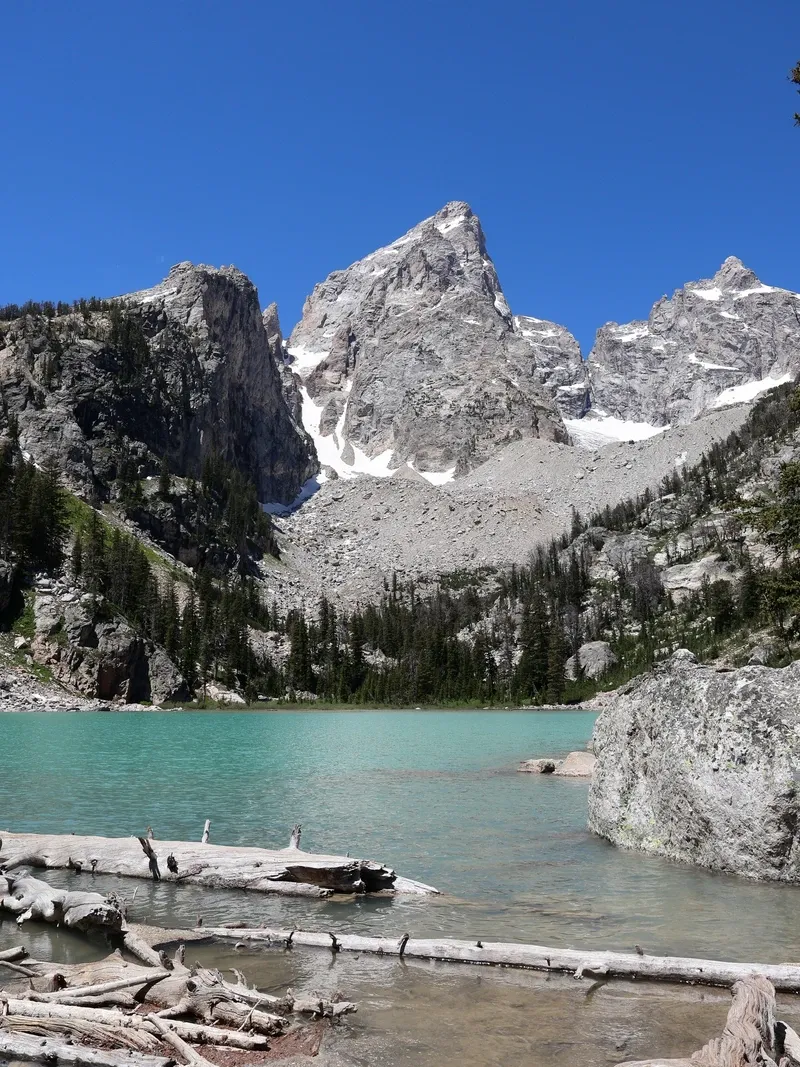
Find Guided ToursGrand Teton National Park is a glaciated mountain region in northwestern Wyoming, located just south of Yellowstone National Park. The park covers 310,000 acres of the rugged Teton Range and the fertile Jackson Hole valley. Through this landscape winds the Snake River, passing by morainic glacial lakes like the deep Jenny Lake and the dam-formed Jackson Lake.
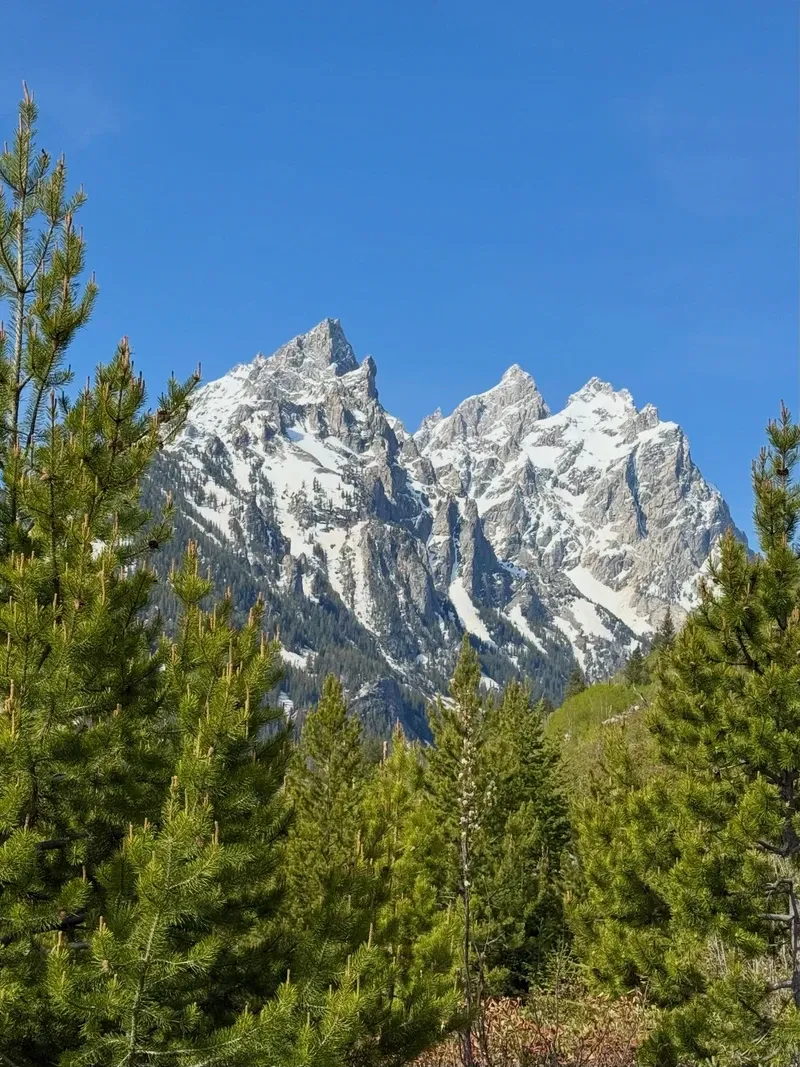
The landscape is defined by the abrupt rise of its mountains. The Teton Range towers 7,000 feet directly above the valley floor without any foothills. At its summit, Grand Teton reaches an elevation of 13,770 feet. Geologically, the range is young and actively growing, yet it contains some of the oldest rocks found in any American national park. These ancient metamorphic formations date back 2.68 billion years.
Beyond its striking geology, the park holds immense ecological value. Combined with surrounding protected lands, it forms part of a nearly 18-million-acre intact mid-latitude temperate ecosystem. This vast area preserves critical habitats for local wildlife and maintains pristine glacial watersheds.
Human presence in the region spans 11,000 years, beginning with nomadic Paleo-Indians and later tribes like the Mountain Shoshone. European fur trappers arrived in the early 19th century, naming the peaks "Les Trois Tetons" around 1810. By the 1880s, homesteaders began settling in the valley. Congress officially established the national park in 1929 under President Calvin Coolidge to protect the major peaks. In 1950, the protected area expanded significantly when most of the Jackson Hole National Monument was incorporated, a move largely made possible by land donations from John D. Rockefeller, Jr.
Discover the full history and cultural significance on our About page.
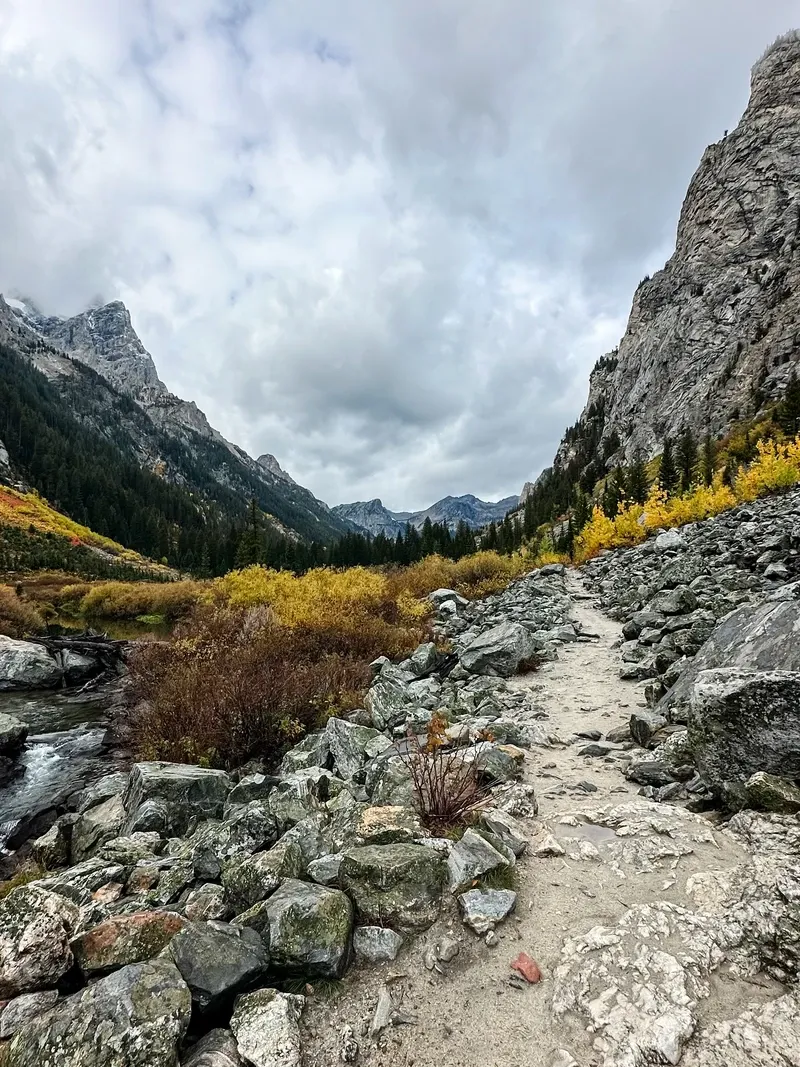
Walk the complete 7-mile trail around the pristine waters of Jenny Lake. This popular five-hour route leads directly to the cascading waters of Hidden Falls and continues toward the Inspiration Point turnoff, providing sweeping panoramic views of the towering Teton Range.
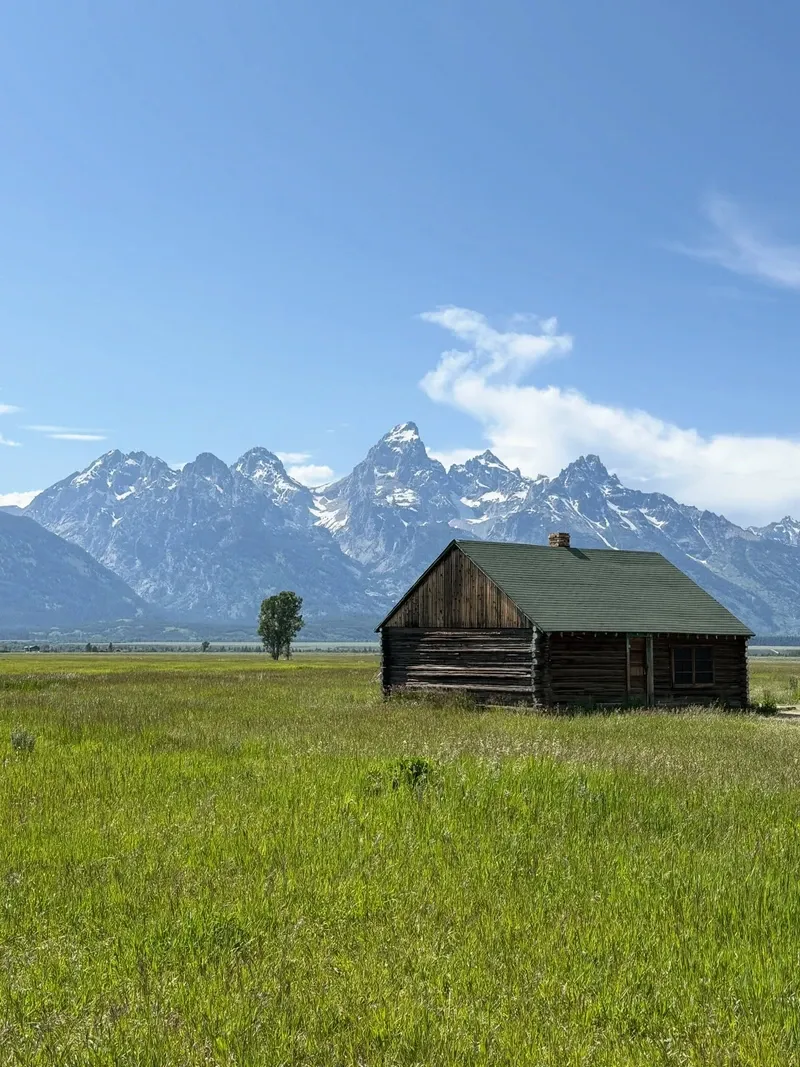
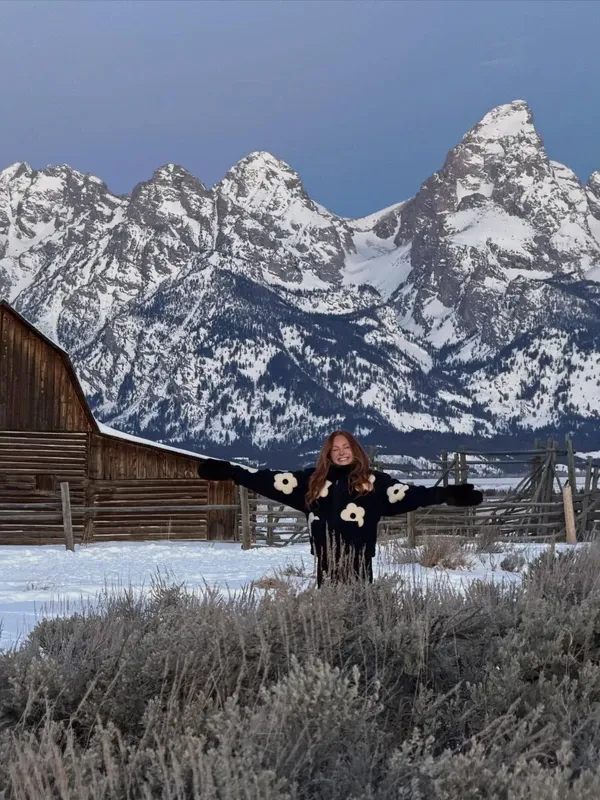
Visit an early Mormon pioneer settlement established along Antelope Flats Road. Photograph the historic John Moulton and T.A. Moulton barns. These 1890s structures stand in stark contrast against the dramatic, jagged backdrop of the Teton Range, presenting one of the most famous scenes in the American West.
Navigate the combined route of Highway 191/89/26 and Teton Park Road. This 42-mile loop takes one to two hours to complete. The drive features numerous educational turnouts, dramatic alpine vistas, and frequent opportunities to spot local wildlife roaming the flat Jackson Hole valley floor.
Walk across the massive concrete dam constructed to control the Snake River. As the park's largest body of water, Jackson Lake draws visitors for excellent birdwatching and water recreation. The site provides unobstructed views of the mountains rising 7,000 feet abruptly above the flat valley floor.
Hand-picked tours with free cancellation and verified reviews
 4h
4h  Free Cancellation 4h
  Free Cancellation 4h
  Free Cancellation 3h
  Free Cancellation 1h 30min
  Free Cancellation 4h
  Free Cancellation 3h
  Free Cancellation 4h
 The optimal time to visit Grand Teton National Park is from May through September, when warmer weather permits full access to hiking trails, lakes, and visitor facilities. Between November and April, harsh winter conditions necessitate the closure of all campgrounds and many park roads.
March and April bring harsh winter weather, keeping campgrounds and roads closed. Conditions improve significantly in May, initiating the busy season as facilities like the Colter Bay Visitor Center open.
These warmer months provide complete access to over 235 miles of hiking trails and kayaking on glacial lakes. Visitors should anticipate busy crowds and intense mosquito activity near water bodies.
September maintains excellent conditions with fully open facilities and active ranger programs. By November, severe winter weather sets in, forcing the closure of all campgrounds, visitor centers, and several roads.
Extreme winter conditions heavily limit park accessibility. Although entry is free, all campgrounds, most visitor facilities, and several roads remain closed, making this a highly restrictive time for general sightseeing.
Grand Teton National Park is open 24 hours a day, 365 days a year. Seasonal variations heavily impact accessibility. From November through April, all campgrounds, most visitor facilities, and several park roads are closed or operate with significantly reduced hours due to harsh winter conditions. Full operations resume in the warmer months, with specific facilities like the Colter Bay Visitor Center open from May 8 to September 30.
| Category | Price |
|---|---|
| Private, non-commercial vehicle (valid for 7 days) | $35.00 |
| Motorcycle (valid for 7 days) | $30.00 |
| Individual (16 years and older entering by foot, bicycle, or ski; valid for 7 days) | $20.00 |
| Non-US resident surcharge (per person, 16 years and older) | $100.00 |
| Grand Teton Annual Pass | $70.00 |
| Interagency Annual Pass | $80.00 |
| Winter Entry (November through April) | Free |
As of May 1, 2026, Grand Teton is a strictly cashless park, accepting only electronic payments. If you enter the park when an entrance station is unstaffed, you must pay your entrance fee online or at a visitor center permits desk later. Non-US residents are exempt from the $100 surcharge if they hold an Annual or America the Beautiful Pass.
For complete schedules and ticket prices, visit our Hours & Fees page.
Visitors can reach Grand Teton National Park by flying directly into the park, driving from major regional hubs like Salt Lake City, or taking a local summer shuttle. The park is located in northwestern Wyoming, just south of Yellowstone National Park.
📍 Highway 89, Moose Entrance, Northwestern Wyoming
Drivers can reach the park by heading north from Salt Lake City International Airport. The 300-mile route passes through rural towns, picturesque farmland, and the scenic Snake River Canyon. Visitors will arrive at the Moose Entrance in the south via Highway 89. A standard private vehicle pass covers the entry fee and remains valid for seven days.
Jackson Hole Airport is the only commercial airport located entirely within a United States National Park. Passengers immediately see stunning views of the Teton Range upon landing. Once on the ground, travelers can easily rent a vehicle from on-site agencies. Alternatively, shuttles provide direct transportation to the nearby town of Jackson.
During the busy summer season, Alltrans operates a convenient public shuttle service. The bus departs from downtown Jackson and travels 13 miles to various locations within Grand Teton National Park. The earliest pickup begins at 7:30 AM. Services run several times daily until the final trips conclude at 7:00 PM.
For detailed transport options and routes, visit our Directions page.
The limited parking lot at the Jenny Lake Visitor Center typically fills by mid-morning. Arrive before 10:00 AM to secure a spot. During the busy summer months, late arrivals are forced to park up to 0.5 miles away along Teton Park Road.
Purchasing your EPA-registered bear spray is much more cost-effective than renting from local concessioners for trips longer than three days. If you are flying into the area, ship it directly to a nearby Amazon Locker. Always carry it in an easily accessible holster.
Wheelchair-accessible lodging units within the park are extremely limited. Cabins with accessible features at popular locations like Signal Mountain Lodge tend to book out up to 17 months ahead of time. Plan your trip well in advance to secure these specific accommodations.
Calm mornings on the Snake River can rapidly transform into windy, dangerous afternoons with strong, unpredictable currents. Before planning any boating trips, call 1-800-658-5771 to check the weekly updated river flow rates. All boaters must wear life jackets and carry patch kits.
Take advantage of the free START Bus Town Shuttle to get around the town of Jackson. It runs roughly every 30 minutes from early morning to late evening. Using this service helps you save on parking and fuel costs while exploring the local area.
Grand Teton is an entirely cashless park that only accepts electronic payments. The standard vehicle entrance fee is $35.00. If you arrive when the entrance station is unstaffed, you are required to pay your fee online or at a visitor center permits desk later.
Located directly north of Grand Teton, this world-famous park features incredible geothermal wonders like Old Faithful and the West Thumb Geyser Basin. Visitors can explore deep canyons and view the spectacular Upper and Lower Falls of the Yellowstone River.
This protected sanctuary adjoins the park's southeastern boundary and provides critical winter habitat for massive elk herds. The scenic, open landscapes just outside Jackson allow visitors to observe abundant regional wildlife.
Situated in southwestern Wyoming's cold sagebrush desert, this monument contains some of the world's best-preserved fossils. You can view incredibly detailed fossilized fish, insects, plants, and reptiles that document ancient lake life.
Read what travelers share about their experience visiting Grand Teton — from practical tips to personal highlights.
A standard 7-day pass costs $35.00 for a private vehicle, $30.00 for a motorcycle, and $20.00 per person entering on foot or bicycle. As of May 1, 2026, the park is entirely cashless and only accepts electronic payments. Non-US residents over 16 must pay an additional $100.00 fee unless they hold a valid interagency pass.
Vehicle reservations or timed-entry permits are not required to enter the park boundaries. However, all lodging and campgrounds must be reserved in advance. Accessible cabins at popular locations like Signal Mountain Lodge can book out up to 17 months ahead of time.
The best months to visit are May through September. During this summer season, all visitor facilities, campgrounds, and the 235 miles of hiking trails are fully open. From November through April, harsh winter conditions force the closure of most roads and heavily limit accessibility.
You can fly directly into Jackson Hole Airport, which is the only commercial airport located entirely within a US National Park. If driving, you can travel 300 miles north from Salt Lake City International Airport, a trip that takes about 5 hours. During the summer, a public shuttle also runs from downtown Jackson to the park for $14.00.
Visitors should pack layers for changing weather, extra clothes, and sturdy hiking shoes. You must also carry EPA-registered bear spray in an easily accessible holster, as grizzly and black bears are highly active throughout the park. Buying bear spray before your trip is generally more cost-effective than renting it from local concessioners.
The park provides paved, flat routes and accessible restrooms at the Craig Thomas, Jenny Lake, and Colter Bay visitor centers. Wheelchair users can also access a fully paved multi-use path that runs for over 6 miles along Teton Park Road. Several trail sections, such as the Jackson Lake Dam overview and the Jenny Lake shore trail, feature appropriate grades for mobility devices.
Launching or operating unmanned aircraft like drones is strictly prohibited throughout the park. Pets are permitted but must be kept on a leash of 6 feet or less and remain within 30 feet of roadways. Dogs are strictly forbidden on hiking trails and the multi-use pathway.
The park is open 24 hours a day, year-round. If the entrance station is unstaffed when you arrive, you can drive through and pay your $35.00 entrance fee online or at a visitor center later. Keep in mind that migrating wildlife frequently cross roads at night, and the nighttime speed limit drops to 45 mph on the main highway.
Browse verified tours with free cancellation and instant confirmation.
Find Tours